



Beyond Borders, Beyond Protection: International Law and the Exploitation of Children in Cults
High-control organizations, colloquially known as “cults,” use coercive practices to maintain membership and control. Their defining feature is not necessarily religion, but substantial control over members’ upbringing, relationships, movements, and access to outside assistance.
Children are particularly vulnerable to this control. Authority over children is often understood to belong to the child’s parents or, when the parents are deemed unfit, to the State’s child-protection system. Sometimes, however, a more accurate account is that parents and their community operate as a unified system of control. Parents may enforce community rules within the household, while community leaders establish the rules parents enforce.
Domestic child-protection authorities investigate conduct under their own laws and are designed to act in the child’s best interests. However, collective movement can frustrate intervention. When an organization relocates children across borders, its decisions may cross jurisdictional boundaries faster than protective systems can respond. The Lev Tahor case illustrates this problem and raises the question of whether international obligations and cooperation mechanisms ensure continuity of protection for children moved between jurisdictions.
Lev Tahor
Founded in Israel in 1988, Lev Tahor has established settlements across North and Latin America. The group has faced allegations across several jurisdictions and criminal convictions in the United States involving child sexual abuse, kidnapping, forced marriage, and exploitation.
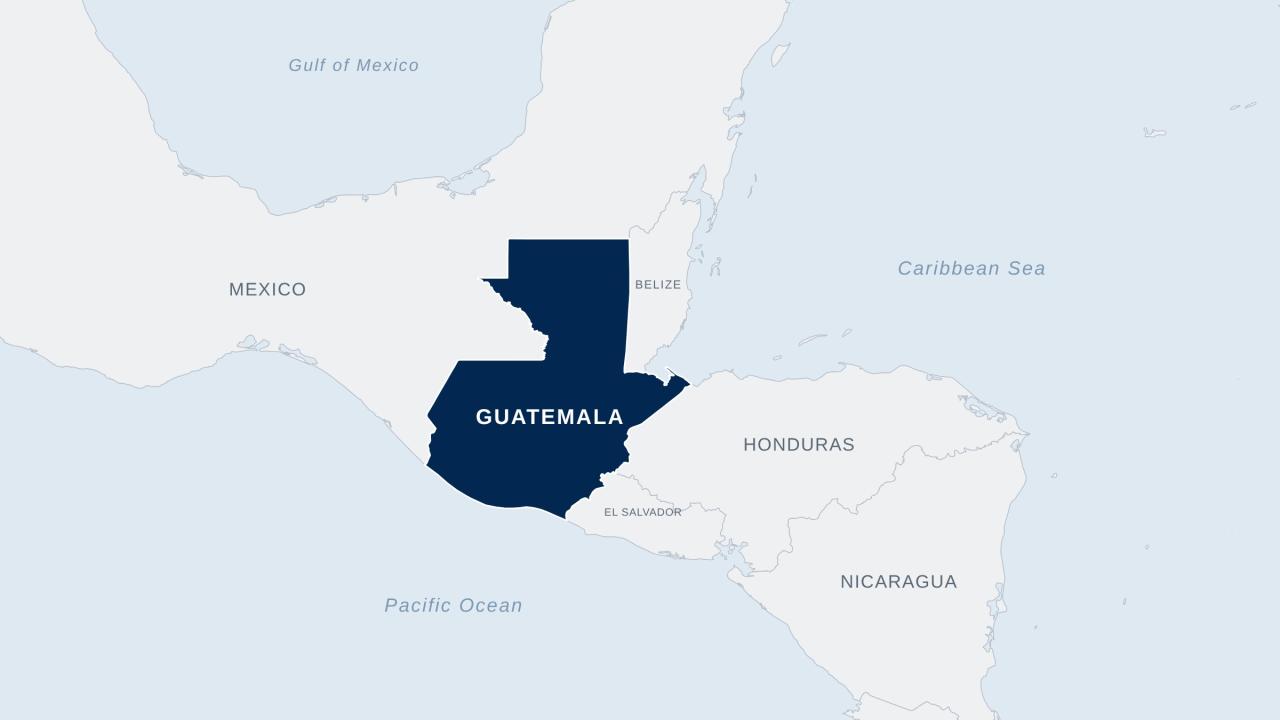
In 2013, Quebec youth-protection authorities began investigating allegations of child neglect and abuse. Days before a court ordered 14 children into foster care in November 2013, community members fled Quebec overnight for Ontario. Some members would remain in Ontario, but many others relocated to Guatemala in 2014 amid continuing custody proceedings. Canadian authorities sought cross-border assistance, but their protective orders did not automatically compel Guatemalan authorities to remove the children. In December 2024, Guatemalan authorities conducted an operation at the community’s Santa Rosa settlement, removing approximately 160 children following allegations of abuse and trafficking.
The contrast between criminal and child-protection cooperation is significant. In 2022, Guatemala extradited senior Lev Tahor leaders to the United States pursuant to U.S. criminal proceedings arising from a December 2018 kidnapping, in which two other leaders had already been convicted in 2021 of kidnapping and child sexual exploitation offenses. By contrast, authorities in both Canada and Guatemala identified exploitation. They initiated child-protection measures, yet the community’s relocation created jurisdictional and enforcement barriers that delayed effective protection for approximately 11 years. The disparity illustrates that cross-border mechanisms for cooperation on criminal matters have proven more effective than those intended to ensure continuity of child protection, which remain fragmented and dependent on domestic jurisdictional arrangements.
What International Law Requires
The Palermo Protocol
Article 3(a) of the Protocol to Prevent, Suppress and Punish Trafficking in Persons, Especially Women and Children (“Palermo Protocol”) defines trafficking as: “the recruitment, transportation, transfer, harbouring or receipt of persons, by means of the threat or use of force or other forms of coercion … for the purpose of exploitation.”
The definition contains three elements: an act, means, and purpose. Under Article 3(c), when the victim is a child, the means element need not be established. Therefore, recruitment, transportation, transfer, harboring, or receipt of a child for the purpose of exploitation constitutes trafficking. Article 3(d) defines a child as any person under 18.
The Protocol requires States Parties to criminalize trafficking under domestic law and to promote international cooperation through information exchange, identification verification, coordinated law enforcement, and victim assistance. Canada and Guatemala are both parties. The Protocol does not create an international criminal tribunal for trafficking—enforcement principally depends on national criminal justice systems and cooperation between States.
The Children of Lev Tahor as Trafficking Victims
Since the means element need not be shown for child victims, the purpose of an act is critical in determining whether the act meets the definition of trafficking. Although Guatemalan authorities alleged that children in the Lev Tahor community experienced forced marriage, sexual abuse, and trafficking, these allegations alone do not establish that the 2014 relocation from Canada was undertaken for exploitation. The move may have been intended to evade Canadian child-protection proceedings.
Those purposes, however, are not mutually exclusive. Lev Tahor’s criminal history provides relevant context when assessing the purpose of this move. In 2018, two senior leaders transported a 14-year-old girl and her 12-year-old brother from New York to Mexico as part of a scheme to return the girl to her adult husband for the purpose of continued sexual exploitation. Therefore, Lev Tahor’s cross-border transportation of children for sexual exploitation is not merely a theoretical risk or strategy within the organization but conduct of which its senior leaders have been convicted.
Furthermore, Article 3(a) extends beyond the initial transportation of a child. It also includes harboring or receipt for the purpose of exploitation. Thus, even if evading Canadian authorities solely motivated the initial relocation, that does not resolve whether the children’s subsequent harboring or receipt in Guatemala served an exploitative purpose. Although the Guatemalan allegations do not independently establish the purpose of the original relocation, they provide additional context for evaluating whether the children’s continued harboring within the community served purposes of exploitation. Considered alongside the organization’s criminal history, the circumstances provide a substantial basis to treat the children as potential victims of trafficking under the Protocol.
The Cross-Border Enforcement Problem
The fundamental difficulty of cross-border child trafficking enforcement is not the absence of international prohibitions. Nor is it a definition that fails to capture cult activities that should constitute trafficking. The difficulty lies in the failure to translate substantive obligations into continuous, effective protection across jurisdictions, especially when entire communities move across borders. The Palermo Protocol prohibits trafficking and requires domestic criminalization, but as Lev Tahor illustrates, it does not ensure that protective proceedings remain effective when children are relocated abroad.
Jurisdiction and Continuity of Protection
Child-protection proceedings ordinarily operate through the institutions of the State where they originate. When children are moved abroad, the originating State may lose the ability to intervene directly. The receiving State, meanwhile, must determine whether its own laws authorize protective action. Foreign court orders do not automatically have effect across borders absent an applicable legal framework.
The 1996 Hague Child Protection Convention was designed to address this problem. It establishes rules governing jurisdiction and provides for recognition of protective measures among Contracting States. However, Canada has signed but not ratified the Convention, and Guatemala is not a party to it. It therefore provided no framework for recognition and cooperation between the two countries in the Lev Tahor proceedings. Relocation consequently required authorities to establish a factual and legal basis for intervention in another jurisdiction rather than simply continuing proceedings already underway, contributing to years of delay.
The Role of Collective Authority
Cross-border protection becomes more difficult when parents and organization leaders jointly determine children’s movements. Protective systems attempting to fight child trafficking can heavily depend on parental cooperation. Yet, that cooperation cannot be presumed when parents participate in alleged exploitation or face constraints imposed by collective authority. In fact, according to IOM data, nearly half of identified child trafficking cases begin with some family member involvement.
Where family decisions are embedded in a community’s collective authority, protecting a child may require intervention against the wider network through which the child is controlled, rather than treating the alleged perpetrator and child as isolated individuals. Relocation can preserve that network while placing it beyond the originating State’s jurisdiction. Authorities in the receiving State must then establish new grounds for intervention under its own law, while identifying children and assessing risks within an unfamiliar institutional and social environment.
What Effective International Protection Requires
The structural problem is not the absence of international prohibitions, but the lack of mechanisms to ensure that protective intervention continues when children cross borders. Addressing this gap requires expedited cooperation, direct coordination between child-protection authorities, and continued protective oversight after relocation. One concrete step would be broader ratification and implementation of the 1996 Hague Child Protection Convention throughout the Americas, supported by designated central-authority channels for information sharing and the coordination of urgent protective measures.
Lev Tahor demonstrates why international protection must be measured not merely by whether exploitation is prohibited, but by whether children remain protected when the community structures surrounding them move beyond the jurisdiction where the danger was first identified.
Author’s Note
Lev Tahor was selected because of its leaders’ criminal convictions and documented cross-border movement of children. The author respects freedom of religion, recognizes that Lev Tahor’s practices do not reflect Judaism as typically practiced, and has deep respect for the Jewish faith.
About the Author
Florentino G. Riesgo-Hawthorne is a third-year J.D. candidate at UC Davis School of Law with a concentration in International and Comparative Law. His research focuses on governmental legitimacy and international accountability for vulnerable populations.
